F1 Betting in the UK: Data, Markets and Strategy for the 2026 Season
 Available in US
By F1 Betting Analyst
- The Numbers and Decisions That Shape Every F1 Bet This Season
- Why F1 Betting Is Entering a New Era
- How F1 Betting Works: From Grid to Chequered Flag
- F1 Betting Markets Explained
- How F1 Odds Work: Fractional, Decimal and Implied Probability
- In-Play Betting on Formula 1 Races
- How the 2026 F1 Rule Changes Reshape Betting
- Core F1 Betting Strategies That Hold Up Under Data
- UK Gambling Regulation and F1: What Changed in 2025-2026
- Responsible Gambling: Tools, Data and Self-Assessment
- Frequently Asked Questions About F1 Betting
The Numbers and Decisions That Shape Every F1 Bet This Season
- F1 accounts for just 0.4% of global sports betting volume despite 827 million fans — a gap that FanDuel’s official operator deal and the ALT Sports Data partnership are designed to close.
- The 2026 regulations (50/50 power unit, active aero, Overtake Mode, two new teams) reset the competitive order. Historical models lose predictive power; early-season data collection is essential.
- UK regulatory reform is real: a GBP 100 million statutory levy, affordability checks, and tighter oversight are now permanent fixtures, not proposals.
- Implied probability, overround comparison, and qualifying-to-race data analysis are the three analytical tools that separate profitable F1 bettors from the rest.
- Bankroll discipline across a 24-race calendar matters more than any single-race pick. Cap individual race exposure at 3-4% of your season bankroll.
Why F1 Betting Is Entering a New Era
I placed my first F1 bet in 2018 — a modest each-way on Daniel Ricciardo to win Monaco. He did. And then I spent the next eight years realising how little that lucky punt taught me about what actually makes this sport tick as a betting product. The truth is, for most of its history, Formula 1 has been a spectator sport that happens to accept wagers on the side. That is changing — fast — and the numbers tell a story that most betting guides completely ignore.
0.4% of Global Handle
F1 accounts for just 0.4% of global sports betting volume — a fraction that Jonny Haworth, F1’s Director of Commercial Partnerships, has called “pretty crazy for a sport the size of Formula One.”
827 Million Fans
The global F1 fanbase hit 827 million in 2025, a 63% surge since 2018, yet fewer than one in four of those fans have placed a motorsport bet in the past year.
Viewership-Betting Correlation: r = 0.85
Between 2020 and 2025, the statistical correlation between F1 viewership and betting volume reached 0.85 — near-lock step growth that signals untapped potential.
That gap between eyeballs and betting slips is the single most important fact in this niche. A global sports betting market valued north of $130 billion, a sport with nearly a billion fans, and a betting share that rounds to zero. Mark Wrigley, F1’s Head of Betting, put it bluntly: bringing Formula One to market where there has been no investment on the product front reveals “loads of green field.” He is not wrong. The appointment of FanDuel as F1’s first official betting operator in April 2026, the ALT Sports Data partnership feeding real-time telemetry into odds engines, the 2026 technical regulations reshaping car performance from the ground up — all of it points to a sport actively building the infrastructure that turns casual viewers into informed punters.
This guide is not a list of bookmakers with affiliate links. I have written those in previous lives, and I know how little they help. Instead, what follows is the analytical foundation I wish someone had handed me back in 2018: how F1 betting actually works, what the markets look like, how odds form and shift, what the 2026 rule changes mean for your wagers, and where the UK’s evolving regulatory framework fits in. Every claim is anchored to data — from the UK Gambling Commission’s latest industry statistics to F1’s own season reviews — because opinions without numbers are just noise at 300 km/h.
How F1 Betting Works: From Grid to Chequered Flag
The first time I tried to explain F1 betting to a friend who punts on football every weekend, he interrupted me after thirty seconds: “So there’s no draw?” That question — oddly enough — captures what makes this sport distinct. No draws, no half-time, no second legs. Twenty drivers line up, and over the next ninety minutes, a result crystallises through a cascade of micro-events: pit stops, tyre degradation, safety car deployments, mechanical failures, weather shifts. Each one moves the odds. Each one is a potential edge.
Betting on Formula 1 in the UK operates through the same licensed bookmakers you would use for Premier League matches or Cheltenham races. The legal framework is identical: you need a UKGC-licensed operator, a verified account, and deposited funds. Where F1 differs is in the structure of a race weekend. A single Grand Prix unfolds across three days — Friday practice, Saturday qualifying (and sometimes a sprint race), Sunday’s main event — and each session opens its own set of markets. Your betting window is not ninety minutes on a Sunday afternoon; it is a rolling three-day sequence of data, odds adjustments, and market openings.
Before You Place an F1 Bet: The Essential Checklist
- Confirm your bookmaker holds a valid UKGC licence — not just any gaming licence, but specific authorisation for remote betting in Great Britain.
- Complete identity verification before race weekend. Verification delays during a live session mean missed markets. The UK’s 13.5 million average monthly active betting accounts all went through this process.
- Set a deposit limit before your first wager. This is not just good practice — UKGC reforms are making affordability checks increasingly routine, and setting your own limits pre-empts friction later.
- Understand the settlement rules for your chosen market. F1 has unique settlement triggers: did-not-finish results, grid penalties applied post-qualifying, and classified finishers (a driver can “finish” without completing all laps). Each bookmaker publishes specific F1 rules — read them.
- Decide whether you are betting pre-qualifying, post-qualifying, or in-play on race day. These are fundamentally different market environments with different information sets, different odds shapes, and different risk profiles.
The UK’s betting participation rate hit 12% in the latest UKGC wave data — a significant 3 percentage-point jump — and online gross gambling yield reached a record annual figure approaching GBP 7.8 billion. F1 sits within that broader market, but its peculiarities matter. Unlike football where you pick a team and a scoreline, F1 asks you to assess twenty individuals operating within ten team structures, on circuits that vary wildly in character, under weather conditions that can change mid-race. It is more complex, which means it is also more exploitable for anyone willing to study the variables.
Classified finisher — a driver who completes at least 90% of the race distance. A driver can be classified (and settle bets) even if they retired in the final laps. This matters enormously for head-to-head and podium markets.
Parc ferme — the period from the end of qualifying until the race start during which teams cannot make significant changes to the car. Odds set after qualifying assume the car configuration is locked. When parc ferme conditions are broken (grid penalty for a new engine, for example), it disrupts the market.
The mechanics are straightforward, but the depth is not. If you have never placed an F1 bet, the sequence is simple: select your market, choose your stake, confirm the bet. If you have placed hundreds, the question shifts from “how” to “when” and “on what” — which is where the rest of this guide earns its keep.
F1 Betting Markets Explained
I remember scanning the F1 markets on a race morning in 2020 and counting seven options. Race winner, podium finish, fastest lap, and a handful of match-ups. That was it. This season, a well-stocked bookmaker might offer forty or more markets per Grand Prix. The product has expanded because F1 itself has invested in making it expandable — the sport’s 0.4% share of global betting handle was never a ceiling, it was neglect. The hiring of a dedicated Head of Betting, the data partnerships, the official operator deals — all of it is infrastructure built to support a richer market ecosystem.
Here is how the current market landscape breaks down. I will keep this at flyover altitude — if you want deep dives into individual markets, the full F1 betting markets guide covers every nuance.
Race Winner
The flagship market. Pick which driver crosses the line first. Settlement is straightforward, but the odds compression at the top of the grid — where two or three drivers dominate — means the value often lives further down the field.
Podium Finish
Back a driver to finish in the top three. Lower odds than race winner, but substantially higher probability. Useful for targeting consistent midfield-to-front runners who lack the outright pace to win but rarely drop below fourth.
Fastest Lap
A prop market driven almost entirely by tyre strategy. The bonus championship point means leading drivers on fresh rubber in the final stint have a structural incentive to push for it — which makes this market more predictable than it first appears.
Constructor Championship
A season-long outright market. Both drivers contribute points, so you are betting on the team’s total package — car development trajectory, driver consistency, and strategic reliability across all rounds.
Head-to-Head Matchups
Teammate versus teammate, or cross-team pairings. These strip away grid noise and isolate the relative performance question: which of these two drivers finishes higher? DNF rules vary by bookmaker, so always check settlement terms.
Props and Specials
Safety car yes/no, number of retirements, grid-to-flag winner (leader from lap one to the end), classified finishers. These niche markets are where the 2026 rule changes — active aero, Overtake Mode — will create the most disruption.
Only 22% of F1 fans who bet on sport have placed a motorsport wager in the past twelve months. That figure, from YouGov’s research into F1’s betting frontier, is both a problem and a signal. The problem: the product has historically been too thin to attract regular punters. The signal: market expansion is designed to close that gap. When bookmakers offer a prop on whether the Overtake Mode button is deployed more than fifty times in a race, they are not being gimmicky — they are building the kind of micro-market ecosystem that keeps football punters engaged through ninety minutes. F1 is borrowing that playbook, and the speed of adoption matters to anyone positioning their bets for the seasons ahead.
How F1 Odds Work: Fractional, Decimal and Implied Probability
A punter I mentor once told me he backed a driver at “5 to 1” without knowing whether that meant he would profit GBP 5 on a GBP 1 stake or GBP 6 total. That confusion is embarrassingly common — and it costs real money. Odds are the language of betting. If you cannot read them, you are placing bets blindfolded. I will walk through the three formats you will encounter and show you how they connect to the only number that actually matters: implied probability.
Fractional Odds — The UK Standard
Displayed as 5/1, 7/2, 11/4 and so on. The number on the left is your potential profit; the number on the right is the stake required to earn it. At 5/1, a GBP 10 bet returns GBP 60 total (GBP 50 profit + GBP 10 stake). Fractional odds are the default at most UK bookmakers for F1 markets. Their advantage: they show profit at a glance. Their drawback: comparing 7/2 against 15/4 in your head, mid-session, is harder than it needs to be.
Decimal Odds — The European and Exchange Format
Displayed as 6.00, 4.50, 3.75 and so on. The number represents total return per unit staked, including the stake itself. At 6.00, a GBP 10 bet returns GBP 60. Decimal odds dominate on betting exchanges and are standard across continental European bookmakers. Their advantage: instant comparison. 4.50 is objectively better than 4.33 — no mental arithmetic required. For anyone comparing prices across multiple bookmakers, decimal format saves time and errors.
The conversion between formats is mechanical. Fractional 5/1 equals decimal 6.00 (divide 5 by 1, add 1). Fractional 7/2 equals decimal 4.50 (divide 7 by 2, add 1). But the format I actually think in — the one that matters for decision-making — is implied probability.
A twenty-car race winner book runs at 115% to 130%, and that surplus is the bookmaker’s margin. Enter the win prices and this strips the margin out, then does something no F1 book shows you: it derives what each driver’s podium price should be from the win market alone. Where the two disagree, one of them is wrong.
| Driver | Win odds | Fair podium | Your podium odds | Value |
|---|---|---|---|---|
| – | – | |||
| – | – | |||
| – | – | |||
| – | – | |||
| – | – | |||
| – | – |
How it works. Each win price becomes an implied probability by dividing one by the decimal odds. Those, plus the combined figure you set for the rest of the grid, give the book total; anything above 100% is the overround. Removing that margin proportionally gives fair win probabilities, and from there a standard order-of-finish model works out how often each driver would come first, second or third. The podium probabilities it produces sum to exactly three, which is the arithmetic check that the model is behaving. Read alongside the odds and implied probability guide and the markets breakdown.
Estimates only. The model assumes finishing order follows relative pace and knows nothing about reliability, grid penalties, safety cars or weather, all of which hit podium markets harder than win markets. Under the 2026 regulations, treat early-season prices as provisional. 18+ — please gamble responsibly. Free, confidential support at BeGambleAware.
From Odds to Implied Probability
Step 1: Take decimal odds of 4.00 for a driver to win a Grand Prix.
Step 2: Divide 1 by the decimal odds. 1 / 4.00 = 0.25.
Step 3: Convert to percentage. 0.25 x 100 = 25%.
Step 4: The bookmaker's implied probability says this driver has a 25% chance of winning. If your own analysis puts the chance at 30% or higher, you have identified a potential value bet. If your analysis says 20%, the market is pricing the driver too short — move on.
Here is the catch: when you add up the implied probabilities of all twenty drivers in a race winner market, the total will not be 100%. It will be somewhere around 115% to 130%, depending on the bookmaker. That surplus is the overround — the bookmaker's margin. A 120% book means roughly 20 percentage points of margin are baked into the prices. This is where the complete odds breakdown goes deeper, but the practical takeaway is simple: the higher the overround, the worse the value for you. Comparing overrounds across bookmakers is as important as comparing the headline odds on a single driver.
| Driver | Fractional | Decimal | Implied Probability |
|---|---|---|---|
| Driver A | 6/4 | 2.50 | 40.0% |
| Driver B | 5/2 | 3.50 | 28.6% |
| Driver C | 6/1 | 7.00 | 14.3% |
| Driver D | 10/1 | 11.00 | 9.1% |
| Rest of Field | Various | Various | ~28.0% |
| Total | ~120.0% |
The 20% above 100% is the overround. In this hypothetical, every GBP 1 you wager returns an average of about GBP 0.83 in the long run — the house takes the rest.

Odds do not sit still. They shift through a race weekend as new data arrives: practice pace, qualifying results, weather forecasts, last-minute grid penalties. The biggest single movement typically comes between Saturday qualifying and Sunday's race. A driver who qualifies third when the market priced them sixth will see their race winner odds contract sharply. If you are going to bet on the race winner market, deciding whether to bet pre-qualifying or post-qualifying is not a detail — it is the decision.
In-Play Betting on Formula 1 Races
Lap 34, Monaco 2023. A safety car scrambles the field, the leader pits, and suddenly the driver I had backed at 14/1 pre-race is running second with fifteen laps to go. My in-play screen showed his odds shortening in real time — 7/2, 3/1, 5/2 — while I sat there deciding whether to cash out or ride it. He finished third. The cash-out offer I turned down at 5/2 would have paid more than the podium-finish return. That episode taught me more about in-play F1 betting than any guide I had read.
Low Latency, High Volume
F1 generates what Jonny Haworth describes as "low latency data at a high volume" — exactly the combination that drives betting. Hundreds of sensors per car produce telemetry streams covering speed, tyre temperature, fuel load, DRS activation and more. This data feeds into odds models that update faster than most punters can react, which is both the opportunity and the challenge of F1 in-play markets.
In-play F1 betting is structurally different from in-play football or tennis. There are no natural stoppages (corners, sets, half-times) that reset the market. Odds move continuously, lap by lap, driven by position changes, gap data, pit stop sequences, and incident flags. More than 30% of F1's digital audience engages with betting content during race weekends, and in-play markets are the primary draw for that engaged segment.
The key in-play markets during a Grand Prix include live race winner (odds update with every position change and pit stop), next safety car deployment (a binary market that spikes in probability at incident-prone circuits), live head-to-head matchups (which often become more interesting mid-race than they were pre-race, as strategy divergence separates teammates), and live fastest lap (where the market only heats up in the final fifteen laps, once teams decide who gets the fresh tyre set). FanDuel's appointment as F1's first official betting operator — with its 17 million customers gaining access to integrated in-play experiences — signals where the product is heading. Karol Corcoran, FanDuel's Managing Director, pointed to F1's "incredible amount of real-time data" as the foundation for building more interactive betting opportunities.
F1's cumulative TV audience in 2025 reached 1.83 billion viewers — a 6.8% increase on the previous year — with an average per-race audience of 76.1 million. Those are the eyeballs that in-play betting products are now designed to monetise.
I will be direct about the risks. In-play odds on F1 are set by algorithms processing data faster than you can. The bookmaker's edge is sharpest when markets move rapidly — during pit stop windows, safety car periods, and weather changes. If you are betting in-play, you need a pre-determined plan: which scenarios trigger a bet, what your stake is, and at what price you walk away. The in-play betting deep dive covers the mechanics of how live odds move lap by lap, including the role of telemetry feeds and cash-out timing — but the foundational principle is this: in-play F1 rewards preparation, not reaction.
How the 2026 F1 Rule Changes Reshape Betting
Every few years, Formula 1 tears up its technical rulebook and starts fresh. It happened in 2014 with the turbo-hybrid era. It happened in 2022 with ground-effect cars. And it is happening again in 2026 — but this time, the scale of change is unlike anything I have seen in eight years of betting on this sport. The new regulations do not just tweak performance; they fundamentally rewire the competitive order. And a rewired competitive order is, for a bettor, the closest thing to a reset button the sport offers.
Active Aero and Overtake Mode
The 2026 cars feature active aerodynamics with two distinct configurations: a high-downforce mode (referred to internally as Z-mode) for cornering, and a low-drag mode (X-mode) for straight-line speed. Drivers can switch between them, and a new "Overtake Mode" button temporarily boosts electrical power deployment for attacking moves. This is not a subtle adjustment — it introduces a tactical variable that will shift in-play odds every time a driver deploys it. Max Verstappen himself has noted that the current energy management demands mean "you cannot drive flat out," and the 2026 rules aim to change that dynamic.
The headline change is the power unit. From 2026, the split between internal combustion engine and electrical power moves to roughly 50/50 — a dramatic increase in the electrical component. This is not just an engineering detail; it is a competitive leveller. Engine manufacturers who dominated the previous era (and whose customer teams benefited from that dominance) face a genuine reset. New power unit suppliers enter the equation: Audi takes over the Sauber operation, and Cadillac joins as an eleventh team. Neither has a track record in this formula, which means pre-season championship odds will carry more uncertainty than they have in years.
The 2026 regulations are the single biggest variable for F1 bettors this decade. Any pre-season championship futures bet placed before testing data emerges is priced on speculation, not evidence. If you are betting outrights, the information advantage shifts dramatically once pre-season testing begins — and shifts again after the first two or three races establish the real competitive order.
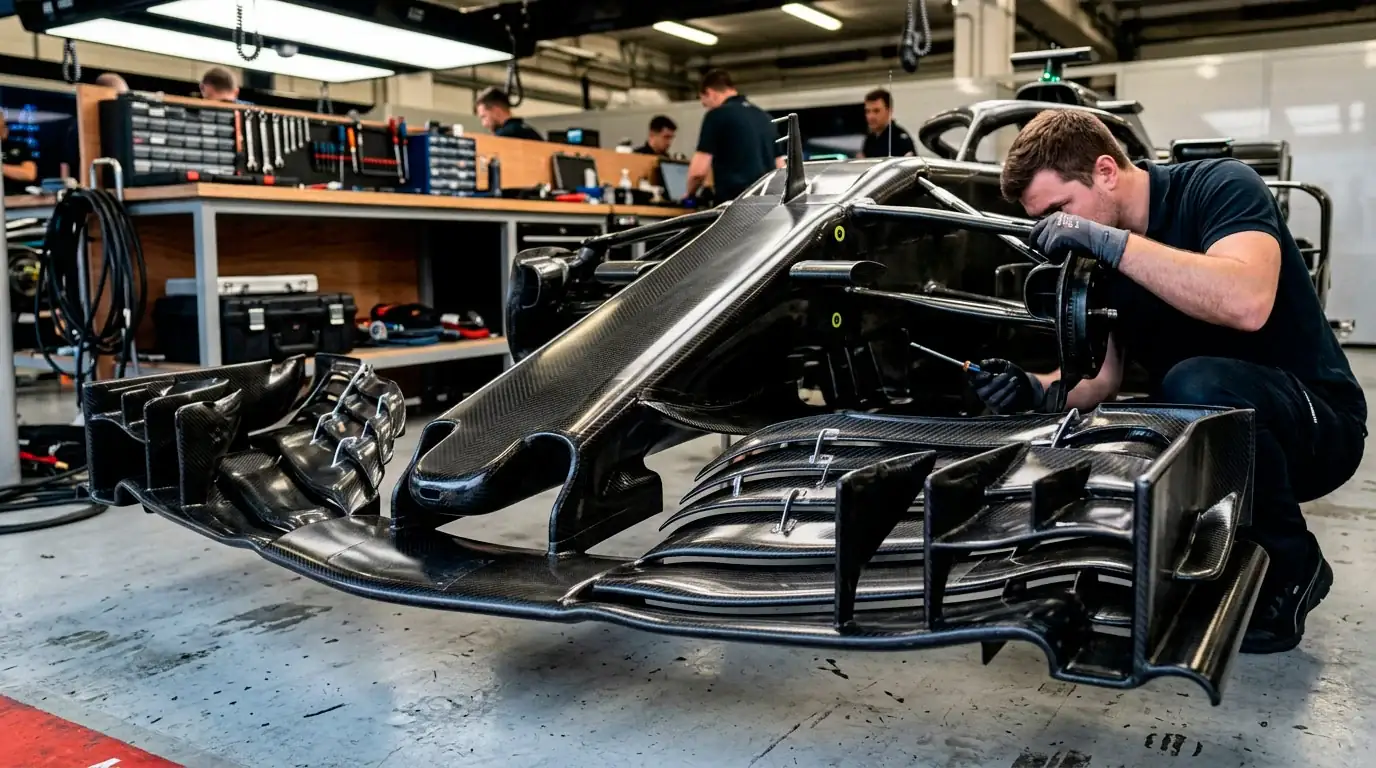
For in-play markets, the introduction of Overtake Mode creates a new category of micro-events. Every deployment is visible to timing screens and telemetry feeds, which means odds algorithms will react to it. Prop markets built around Overtake Mode deployments, active aero configuration switches, and energy management strategies are already being discussed by bookmakers preparing their 2026 offerings. The FanDuel partnership — announced in April 2026 as the first official betting operator deal in F1's history — was explicitly designed to exploit this data-rich environment. Jonny Haworth, the man who brokered it, pointed out that F1 produces high-volume, low-latency data that is precisely what drives betting, and the 2026 cars will generate even more of it.
My advice for the transition season: treat the first five or six races as a data-collection exercise. Historical models — the ones that tell you how often pole-sitters convert to wins, or what the safety car probability is at Monaco — are built on a regulatory era that no longer exists. The 2026 cars will behave differently in traffic, degrade tyres differently, and pit at different strategic windows. Smart bettors will be building new datasets from race one, not relying on patterns from the old formula.
Core F1 Betting Strategies That Hold Up Under Data
Here is a confession: in my first two years of betting on F1, I lost money consistently. Not because I picked the wrong drivers — my instincts about pace were decent — but because I had no framework. I bet the same stake on every race, ignored qualifying data, and chased losses after a bad Sunday. It took a systematic rethink, grounded in actual performance data rather than gut feel, before the returns turned positive. The strategies below are the ones that survived that rethink.
Before anything else: 58% of motorsport bettors are aged 18 to 34, making this one of the youngest-skewing betting demographics outside of esports. If you are in that bracket, you are statistically more likely to bet impulsively and less likely to use bankroll management tools. I am not lecturing — I was that 26-year-old once — but the data says this is where the biggest leaks are.
The first non-negotiable is bankroll segmentation. A 24-race F1 calendar means your annual betting bankroll needs to survive at least 24 independent events, plus sprint races, plus championship futures. I allocate no more than 3-4% of my season bankroll to any single race. That sounds conservative until you remember that a bad run of five races — which happens to every punter — would otherwise wipe a third of an aggressive bankroll. The 2026 calendar's density demands discipline; there are race weekends where Sunday's result barely settles before the next Friday's practice begins.
The qualifying-to-race gap is the single most underexploited edge in F1 betting. 43% of F1 fans are under 35, and many of them are watching qualifying sessions thanks to streaming access — yet the odds movement between post-qualifying and race start often misprices drivers who qualified out of position due to track evolution, traffic, or a setup gamble. When a driver qualifies fifth but had the second-fastest long-run pace in practice, the race-winner odds rarely reflect that fully. The strategy guide breaks this down with specific qualifying-to-race conversion data.
Do
- Compare long-run pace from Friday practice to qualifying results — the gap reveals mispriced drivers.
- Track the overround on your chosen market across at least three bookmakers before placing a bet.
- Set per-race and per-week stake limits before the season starts, not mid-weekend.
- Treat the first few races under new regulations as a data-gathering phase, not a profit-seeking one.
- Log every bet with odds, stake, rationale, and outcome — patterns only emerge from records.
Don't
- Chase losses by increasing stakes after a bad race — the next Grand Prix does not know about the last one.
- Rely on a single stat like grid position without adjusting for circuit type (Monaco grid is destiny; Monza grid is a suggestion).
- Assume that the pre-2026 data models apply cleanly to the new-regulation cars.
- Stack accumulators with correlated legs (same team winning constructor market and both drivers finishing top five) — correlation kills the advertised price.
- Bet on every race. Some weekends, the value is not there. Sitting out is a strategy, not a failure.
Strategy only functions within legal boundaries — and those boundaries shifted substantially in 2025 and 2026. What changed, and what it means for how you bet, is the subject of the next section.
UK Gambling Regulation and F1: What Changed in 2025-2026
In April 2025, something happened that I had been expecting for years but most betting guides still have not caught up with: the UK government introduced a mandatory statutory gambling levy. Not voluntary contributions. Not industry pledges. A legally enforceable GBP 100 million annual charge on operators, directed to research, prevention, and treatment of gambling-related harm. If you are betting on F1 in the UK, this is not background noise — it is a structural change to the economics of the bookmakers you use, and it filters down to odds, promotions, and account management.
The GBP 100 Million Statutory Levy
Introduced in April 2025 under the Gambling Levy Regulations, the statutory levy requires all UKGC-licensed operators to contribute to a fund supporting research, prevention, and treatment of gambling harm. The money flows into GambleAware-administered programmes, NHS treatment services, and public health research. This replaced the previous voluntary system, which consistently fell short of targets. The levy is permanent, index-linked, and applies to every licensed operator offering services to UK customers.
The levy is one piece of a broader regulatory overhaul stemming from the Gambling Act Review — the most significant rewrite of UK gambling law since the original 2005 Act. For F1 bettors specifically, the reforms that matter most are affordability checks and online stake limits. The affordability checks mean that operators now conduct financial risk assessments on customers whose spending patterns trigger certain thresholds. If you are a high-volume F1 bettor — placing multiple bets across every race weekend, accumulating significant stakes across a 24-race season — you may encounter enhanced checks that require income verification. The process is designed to protect vulnerable customers, but it introduces friction that did not exist two years ago.
Online stake limits, meanwhile, have been set at GBP 5 per spin for slot players aged 25 and over, and GBP 2 for those aged 18 to 24. These do not directly apply to sports betting (which has no per-bet caps imposed by the regulator), but they signal the direction of travel. The regulatory appetite for intervention is growing, and sports betting — including F1 — sits within that trajectory. Tom Watson, the former Shadow Culture Secretary, argued years ago that the explosion of gambling advertising in live sport "fuels addiction and exposes children and young people to gambling at too young an age." That view has only gained political support since.
The broader UK gambling market provides context. Total industry gross gambling yield hit GBP 11.5 billion in the most recent reporting period, up 5.7% year on year, with the remote sector (online casino, betting, and bingo) generating GBP 6.9 billion of that. The industry is not shrinking — it is growing — and the regulatory response is calibrated to manage that growth, not to curtail it. For the F1 bettor, this means your activity is subject to more oversight than ever before. Understanding your rights under the regulatory framework — including how to file a complaint through the Alternative Dispute Resolution process — is as much a part of the modern punting landscape as understanding how odds work. The full regulatory picture, including advertising restrictions and their impact on F1 sponsorship, is covered in the UK regulation guide.
The UKGC estimates that 1.4 million adults in the UK — around 2.5% of the adult population — experience problems with gambling. That figure anchors the regulatory reforms. The statutory levy, the affordability checks, the stake limits: all of them are designed with that 2.5% in mind. If you are betting responsibly, the reforms should create minimal friction. If they are creating friction, that itself is a data point worth reflecting on.
Responsible Gambling: Tools, Data and Self-Assessment
I have written about F1 betting for eight years, and for the first five of those I treated the "responsible gambling" section of any guide as a box to tick — one paragraph, a helpline number, done. I was wrong to do that, and the data makes clear why. That 2.5% problem gambling rate cited in the regulation section translates to real people in real distress — and the issue extends beyond adults. Among young people aged 11 to 17, 1.2% meet the criteria for problem gambling, and 49% participated in some form of gambling activity over the previous year. These are not abstract figures. They are the reason the regulatory framework tightened, and they are the reason this section is not a footnote.
GambleAware provides free, confidential support for anyone concerned about their gambling. The National Gambling Helpline is available 24 hours a day, 7 days a week. GamStop offers a free self-exclusion scheme that blocks you from all UKGC-licensed online gambling sites for a period of your choosing: six months, one year, or five years. Both services exist because the industry's previous approach — a "gamble responsibly" tagline at the bottom of a page — was not enough.
F1 has specific risk factors that generic responsible gambling advice does not cover. A race weekend concentrates betting activity into a compressed window — Friday through Sunday, with markets opening and closing in rapid succession. The emotional charge of watching a live Grand Prix while holding an open in-play bet is materially different from selecting a football accumulator hours before kick-off. Prop market proliferation (safety car odds, fastest lap, Overtake Mode deployments) creates more touchpoints for impulsive bets during a single event. And the 24-race calendar means this cycle repeats roughly every fortnight for nine months. That rhythm can normalise escalating stakes in a way a weekly football habit does not.
Mark Wrigley, F1's Head of Betting, addressed this directly when discussing how the sport approaches its betting integrations. F1 requires age verification to access betting content, and Wrigley described the approach as leading with "safer gambling and responsible gambling messaging" rather than pure betting encouragement. That is the right instinct, though it is worth noting that F1's commercial interest in growing its betting handle exists in tension with harm minimisation. Both things can be true.
Among young people aged 11 to 17 in the UK, 49% participated in some form of gambling over the past year — and F1's audience skew toward younger fans means the sport's betting expansion coincides directly with the demographic most at risk of normalising gambling behaviour early.

The practical tools available to UK bettors are more robust than most people realise. Every UKGC-licensed operator must offer deposit limits, loss limits, session time limits, and cooling-off periods. Reality checks — pop-up notifications that tell you how long you have been on the platform and how much you have wagered — are mandatory. GamStop self-exclusion covers all UKGC-licensed online operators simultaneously, and it is free to use. If you are betting on F1 regularly, I would recommend at minimum setting a weekly deposit limit before the season starts and reviewing your betting log after every five-race block. Not because you are necessarily at risk, but because the structure creates awareness — and awareness is the tool that all the others depend on.
Frequently Asked Questions About F1 Betting
Is F1 betting legal in the UK?
Yes. Betting on Formula 1 is fully legal in the UK for anyone aged 18 or over. All operators offering F1 betting markets to UK customers must hold a licence from the UK Gambling Commission. The UKGC's regulatory framework covers online and retail betting, and F1 falls under the same rules as any other sport. You can verify an operator's licence status directly through the UKGC's public register. If an operator is not on that register, do not bet with them — regardless of what promotions they advertise.
What types of bets can you place on Formula 1?
The range of F1 betting markets has expanded significantly. Core markets include race winner, podium finish (top three), fastest lap, pole position, head-to-head driver matchups, and constructor championship outrights. Beyond those, prop and special markets cover safety car deployment (yes/no, number of deployments), number of retirements, grid-to-flag winner, and — increasingly for 2026 — markets tied to active aero and Overtake Mode usage. Bet builders allow you to combine multiple selections from the same race into a single wager. Each-way betting is also available, typically paying on the top three or top six depending on the bookmaker's terms.
How do F1 odds work — fractional versus decimal?
Fractional odds (the UK default) show potential profit relative to stake: 5/1 means GBP 5 profit per GBP 1 staked. Decimal odds (standard on exchanges and European platforms) show total return including stake: 6.00 means GBP 6 back on a GBP 1 bet. Both express the same thing differently. To convert fractional to decimal, divide the first number by the second and add 1 — so 5/1 becomes 6.00, and 7/2 becomes 4.50. The format that matters most for analysis is implied probability: divide 1 by the decimal odds, then multiply by 100 to get the percentage chance the bookmaker is pricing in.
Can you bet on F1 races live during the Grand Prix?
Yes. In-play betting is available for Formula 1 at most major UK-licensed bookmakers. Live markets typically include race winner, fastest lap, head-to-head matchups, and next safety car. Odds update continuously based on position changes, pit stops, incidents, and gaps between drivers. Cash-out options are generally available on in-play bets, though the offered amount fluctuates with the live odds. The speed of odds movement during a race is driven by F1's telemetry data — the sport produces high-volume, low-latency data that algorithms process faster than any human can manually react to. That makes preparation and pre-set plans essential for in-play betting.
What is a sensible F1 betting strategy for beginners?
Start with a fixed season bankroll and limit any single race to 3-4% of that bankroll. Focus on one or two market types rather than spreading across every available option. Head-to-head matchups and podium finish markets are often more forgiving for newcomers than the race winner market, because they reduce the field to a binary or top-three outcome. Watch qualifying before betting on the race — the qualifying session provides the freshest data, and post-qualifying odds often offer better-informed prices than pre-weekend markets. Log every bet: stake, odds, reasoning, and result. Patterns only become visible through records, and most beginners do not keep them.
How do the 2026 F1 rule changes affect betting markets?
The 2026 technical regulations introduce a 50/50 power unit split (ICE and electrical), active aerodynamics with driver-controlled modes, and an Overtake Mode that provides a temporary electrical power boost. Two new teams — Cadillac and Audi — join the grid. Together, these changes reset the competitive order, which means pre-season championship odds carry more uncertainty than in a typical year. New prop markets tied to Overtake Mode usage and active aero deployment are expected. In-play betting becomes more dynamic because drivers now have tactical tools (mode switches) that are visible in real-time data and directly influence overtaking. Historical performance data from the previous regulation era becomes less predictive.
What responsible-gambling tools are available to UK bettors?
Every UKGC-licensed operator is required to offer deposit limits, loss limits, session time limits, cooling-off periods, and reality-check notifications. GamStop provides a free self-exclusion scheme that blocks access to all UKGC-licensed online gambling sites for six months, one year, or five years. GambleAware operates the National Gambling Helpline, available 24/7, offering free and confidential advice. The GBP 100 million statutory gambling levy, introduced in April 2025, funds research, prevention, and treatment programmes. If you are concerned about your betting patterns, setting a deposit limit and reviewing your betting log regularly are the most practical first steps.
Created by the ”Betting f1” editorial team.